- Valley Recap
- Posts
- 🔥 SIGN UP FOR AI INFRASTRUCTURE WEEK. 💰Bay Area Startups Collectively Secured $20B in March MTD
🔥 SIGN UP FOR AI INFRASTRUCTURE WEEK. 💰Bay Area Startups Collectively Secured $20B in March MTD

In partnership with


AI infrastructure in 2026 doesn’t respect boundaries anymore. Power decisions hit model performance. Cooling limits shape rack density. Model behavior drives how hardware is actually used. Everything is tied together, and when one layer slips, the rest follow.
That’s where things start to break for teams still operating in silos.
Model builders can’t assume infrastructure will stretch to meet whatever they design. Power isn’t flexible on that timeline. Cooling isn’t optional. At the same time, infrastructure teams can’t keep building generic capacity and expect workloads to behave. What gets deployed now has to match what actually runs, down to how models consume tokens and how long they stay active.

✅ FollowGuy Massey, for tech and infrastructure truths made simple
So the work is shifting. Co-design is becoming the default way things get done. Model teams are sitting with facility engineers earlier. Operators are designing around specific workloads instead of broad categories. Decisions that used to be sequential are now happening side by side, because waiting introduces cost that compounds fast.
This is what connecting the stack looks like in practice. Land, energy, compute, and models all need to line up at the same time, under the same assumptions. Capacity isn’t something you just install anymore. It has to come together cleanly. Real estate without power stalls. Power without deployed compute sits idle. Compute without tuned workloads burns money faster than expected. The output that matters is usable intelligence, something that behaves more like inventory than infrastructure.

You can already see the pressure building at the enterprise layer. Systems like NVIDIA NemoClaw point toward a world where agents run continuously, planning, calling tools, and interacting with other systems without waiting for a human prompt. That kind of workload doesn’t spike and settle. It stays active, expands, and generates its own demand. Small inefficiencies don’t stay small when the system is always on.
That changes how scale works. It’s no longer about pushing more requests through a fixed pipeline. It’s about whether the entire system can support long-running, multi-step execution without costs drifting out of control or performance becoming unstable.
The advantage is starting to show up in how well teams coordinate across layers. Optimizing one part of the stack in isolation doesn’t carry the same weight anymore. Lining everything up does. When hundreds of billions in capital are moving each year, execution becomes the constraint, and execution depends on how tightly these pieces fit together.

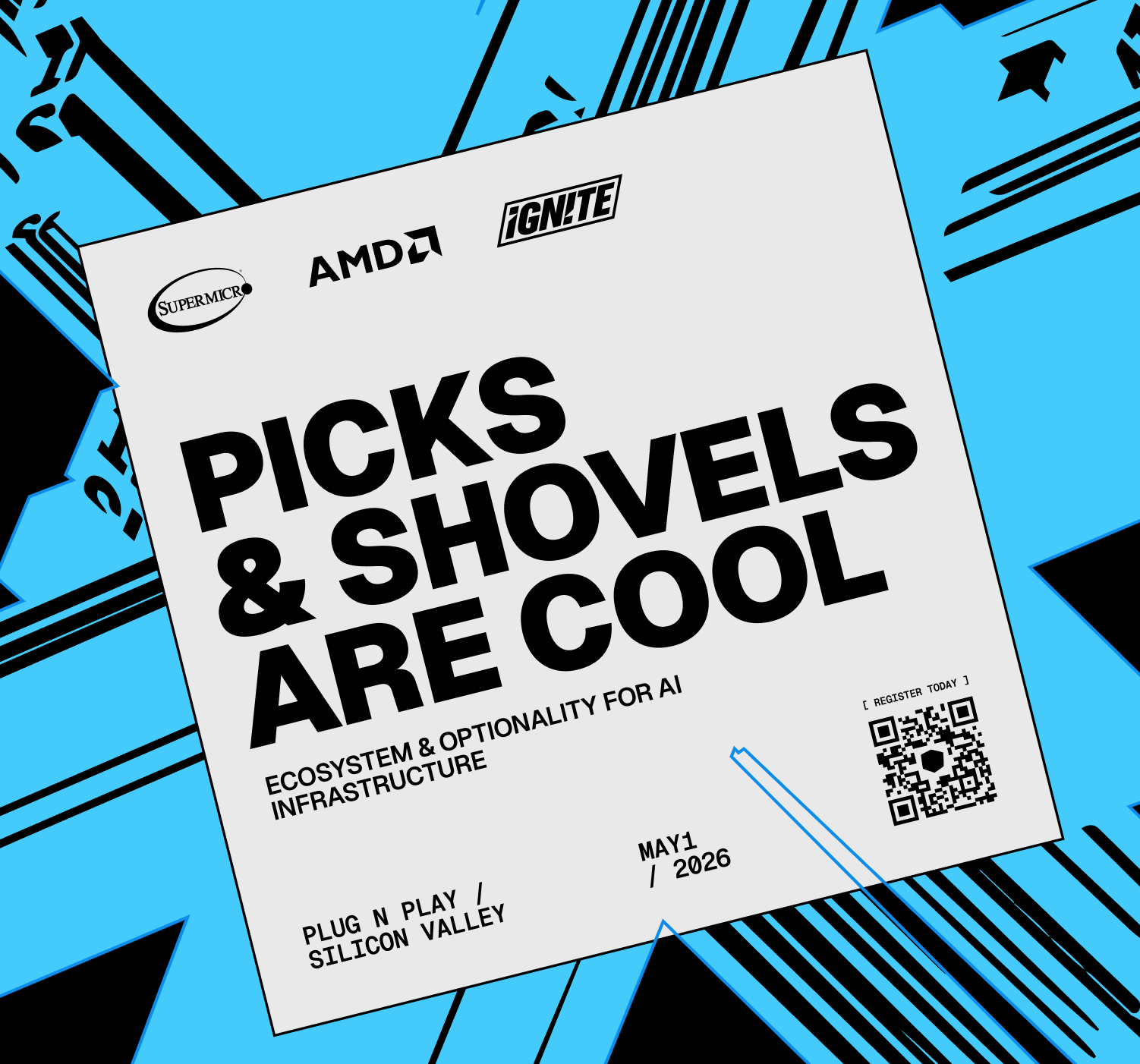
That’s the context behind AI INFRA SUMMIT 5. Join the waitlist today.
This isn’t built for passive attendance. It’s where real estate, power, compute, and model teams are in the same room, working through these constraints together. It’s where the people deploying that $527B in CapEx meet the ones responsible for turning it into actual capacity.
If you’re building, buying, or connecting in this market, proximity matters. The conversations shaping what gets built aren’t happening in isolation anymore. They’re happening in rooms where the full stack shows up.


SambaNova will be joining us at AI INFRA SUMMIT, bringing its full-stack AI platform built to run large models efficiently in production. By combining purpose-built hardware with an integrated software layer, SambaNova enables a seamless path from model development to real-world deployment.
What SambaNova Will Showcase
Purpose-built AI hardware optimized for large-scale model workloads
Integrated software stack for both training and inference
Pre-configured systems that simplify generative AI deployment
Performance tuned for throughput, latency, and cost efficiency

Why It Matters
Running large models is expensive and complex. Most teams are stitching together infrastructure, software, and optimization themselves. SambaNova packages that into a single system, reducing time to deployment and improving efficiency at scale.
Who It Serves
Enterprises, government organizations, and AI teams deploying large language models and generative AI systems in production environments. Learn more at sambanova.ai.


The South Bay is ground zero for AI infrastructure—and we’re turning it into a full week of high-signal events leading into AI INFRA SUMMIT.
In collaboration with Plug and Play, we’re bringing together the ecosystem across three days: kicking off Wednesday in downtown San Jose with a deep dive on data centers, followed by a full-day Physical AI program on Thursday with Telus Digital, and culminating in the AI INFRA SUMMIT as the grand finale.
Capacity is limited—lock in your spot early for AI Infrastructure Week See you there.
WED APR 29th 3p-6p | THURS APR 30th | FRI MAY 1st |


CLAWCAMP // APR16
We're excited to partner with ClawCamp.us on the community’s full-day workshop event, Thursday, April 16th. Attendees experience a full-day of upskilling (beginner—advanced) that includes Partner Perks (incl. free OpenClaw agents), Onboarding (for beginners), Workshops (all levels), Skills Building, Skills Competition, Networking, and more!
You can even get your own M4 Mac mini, fully configured, if you purchase that package. RSVP and learn more about the event here


Bay Area Startups Collectively Secured $7.2B in March MTD
The last day of March almost tripled total funding, with a $12B round for OpenAI plus other megadeals that raised the total to $20B for the full month. That brings the first quarter of 2026 to an unprecedented high of more than $200B, more than any previous quarter.
Exits, IPO dollar highs and number lows: 2026 is likely to top 2021 in IPO proceeds if Anthropic, OpenAI and SpaceX complete their offerings. All three are expected to be among the largest IPOs ever, with predictions of $75B for SpaceX and $60B each for Anthropic and OpenAI. Those three alone would exceed the 2021's $142B in proceeds and could discourage other IPOs, resulting in lower numbers than 2022's low of 181. But if the previous six-year cycle plays out again, 2027 could be a return to highs, both in numbers and dollars.

Webinar Alert: LinkSV's Tech, Talent & Investment Trends is next Friday, April 10 @ noon PT. Join us for a look at Q1 2026, the unprecedented funding levels and where Q2 is likely to take us. How long can AI Infra funding continue at this level, and where do the non-AI startups go for investment? We'll have updates on funding to women and the increasing obstacles to closing Series A after your seed round. Register here for the link.
Early Stage:
Sycamore Labs closed a $65M Seed, the trusted agent operating system for the enterprise.
Cognichip closed a $60M Series A, developing the world’s first Artificial Chip Intelligence to re-imagine chip design.
NomadicML closed a $8.4M Seed, is the Visual AI platform for physical autonomy.
Miravoice closed a $6.3M Seed, an AI-powered platform for precision voice-based data collection.
Anvil Robotics closed a $5.5M Seed, builds low volume customized robots for teams at Nvidia, Google, Co.bot, Path Robotics, Ultra Tech, and more.
Growth Stage:
OpenAI closed a $12B Series unknown, an AI research and deployment company.
depthfirst closed a $80M Series B, an applied AI lab developing novel security solutions for businesses facing modern, AI-era threats.
Alcatraz AI closed a $50M Series B, our mission is to make authentication secure and friction-less.
Stedi closed a $50M Series C, the only programmable healthcare clearinghouse.
Your Feedback Matters!
Your feedback is crucial in helping us refine our content and maintain the newsletter's value for you and your fellow readers. We welcome your suggestions on how we can improve our offering. [email protected]
Logan Lemery
Head of Content // Team Ignite
Market Volatility Exposes Weak Delegation

When markets get shaky, advisors don’t just manage portfolios. They manage fear, questions, follow-up and a flood of client communication.
That’s where weak delegation gets expensive.
If meeting prep, paperwork, CRM updates and account admin still run through you, response times slip and the client experience takes the hit.
BELAY created the free Financial Advisor’s Delegation Guide to help you identify what to hand off, what to keep and how to stay client-facing without losing control.
Inside, you’ll learn how to reduce bottlenecks, protect responsiveness and free up more time for the work only you should be doing.