- Valley Recap
- Posts
- 🦞NemoClaw: The Missing Layer Under Agents? 📈Largest Quarter of VC Investments Ever: $216B💰
🦞NemoClaw: The Missing Layer Under Agents? 📈Largest Quarter of VC Investments Ever: $216B💰
In partnership with


🦞NemoClaw: The Missing Layer Under Agents?
Most people look at NVIDIA NemoClaw and see another agent framework. That misses the point.
What NemoClaw actually introduces is a layer that has been missing from the agent conversation entirely, something closer to an operating environment for autonomous systems than a model toolkit. Agents were already capable of planning, executing, and calling tools, but they were unreliable in production because nothing underneath them enforced how they behaved once they started acting on their own.
That gap shows up fast when agents move beyond demos. They read files, make network calls, access credentials, trigger workflows, and sometimes generate their own follow-on tasks. Without control at that level, the system becomes difficult to trust, especially in enterprise environments where data boundaries and auditability matter. NemoClaw is designed to sit directly in that gap, inserting policy, isolation, and control into the execution layer itself rather than trying to bolt it on afterward.
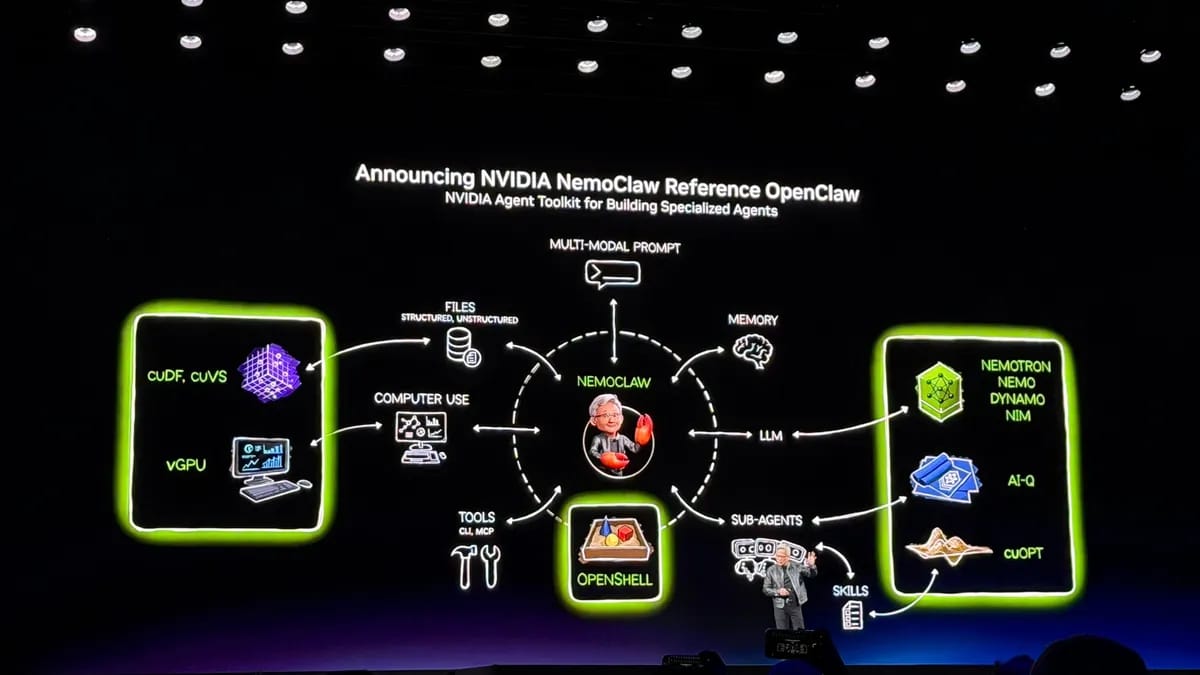
Jensen Huang CEO NVIDIA at GTC
That changes how agents can be used
Instead of being treated as tools that run occasionally, agents start to look like persistent processes that operate continuously across systems. NemoClaw is built to support always-on agents that can run locally, in the cloud, or across hybrid environments, with the expectation that they are active over long periods of time rather than spun up per request. That alone shifts the infrastructure profile. Compute demand stops behaving like bursts and starts behaving like background load that never fully turns off.
Security becomes part of the execution model, not a wrapper around it. NemoClaw uses a sandboxed runtime that controls what an agent can access, how it interacts with systems, and where data flows, effectively treating every agent action as something that must be governed in real time. This is less about protecting against failure and more about making autonomous behavior predictable enough to deploy at scale.
That predictability is what enterprise adoption has been waiting on.
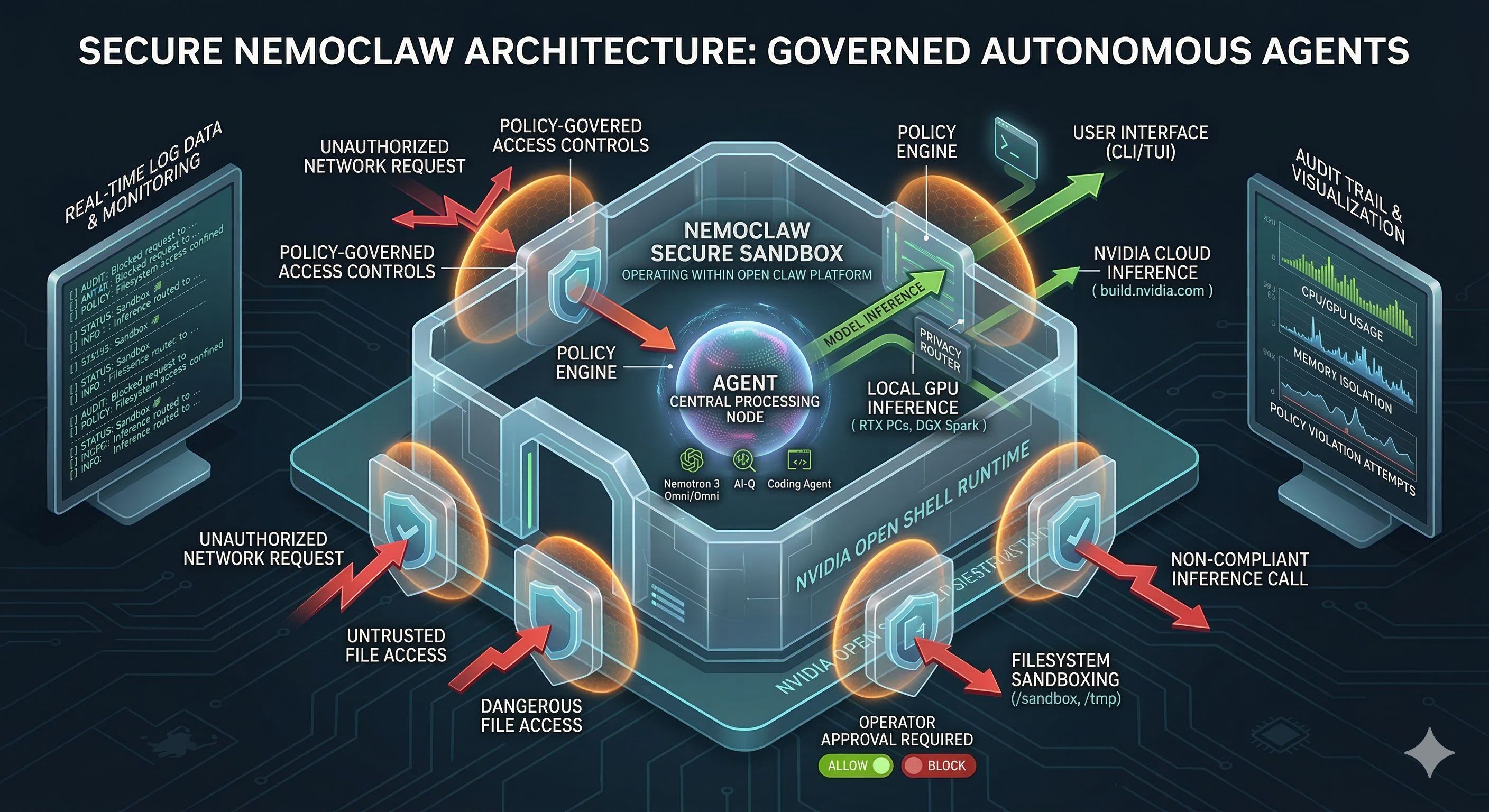
Conceptual diagram of secure AI agent architecture (inspired by NVIDIA NeMo / NemoClaw)
Agent frameworks proved that autonomous systems could exist. NemoClaw is part of the push to make them usable inside organizations that care about compliance, data boundaries, and operational risk. Once those constraints are handled at the infrastructure layer, the conversation shifts from “can we trust this” to “how much of our workflow can this take over.”
Agents start chaining work together, calling other systems, and generating their own demand for compute. When those systems run continuously, the load they create compounds quickly. A single agent isn’t the problem. Thousands of them, each running multi-step workflows around the clock, start to look like a new class of infrastructure demand.
This is where NemoClaw connects back to the broader shift. It is making agents stable enough to scale, and scaling is what breaks assumptions across the stack. Power, cooling, scheduling, and cost models all begin to feel the impact once agents move from experimentation into production.

This is Where AI gets Real.
This isn’t built for passive attendance. It’s where real estate, power, compute, and model teams are in the same room, working through these constraints together. It’s where the people deploying that $527B in CapEx meet the ones responsible for turning it into actual capacity.
If you’re building, buying, or connecting in this market, proximity matters. The conversations shaping what gets built aren’t happening in isolation anymore. They’re happening in rooms where the full stack shows up.

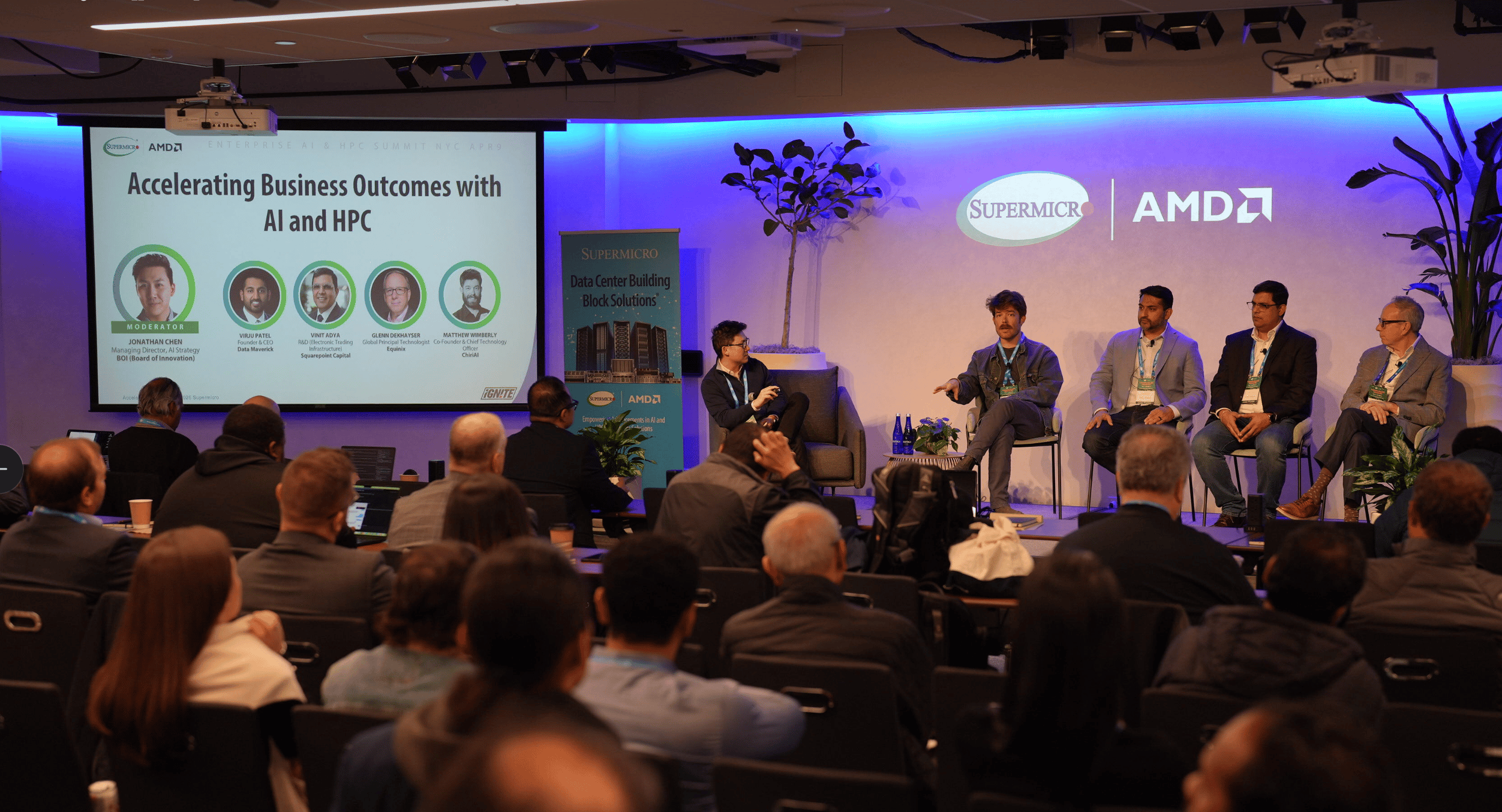
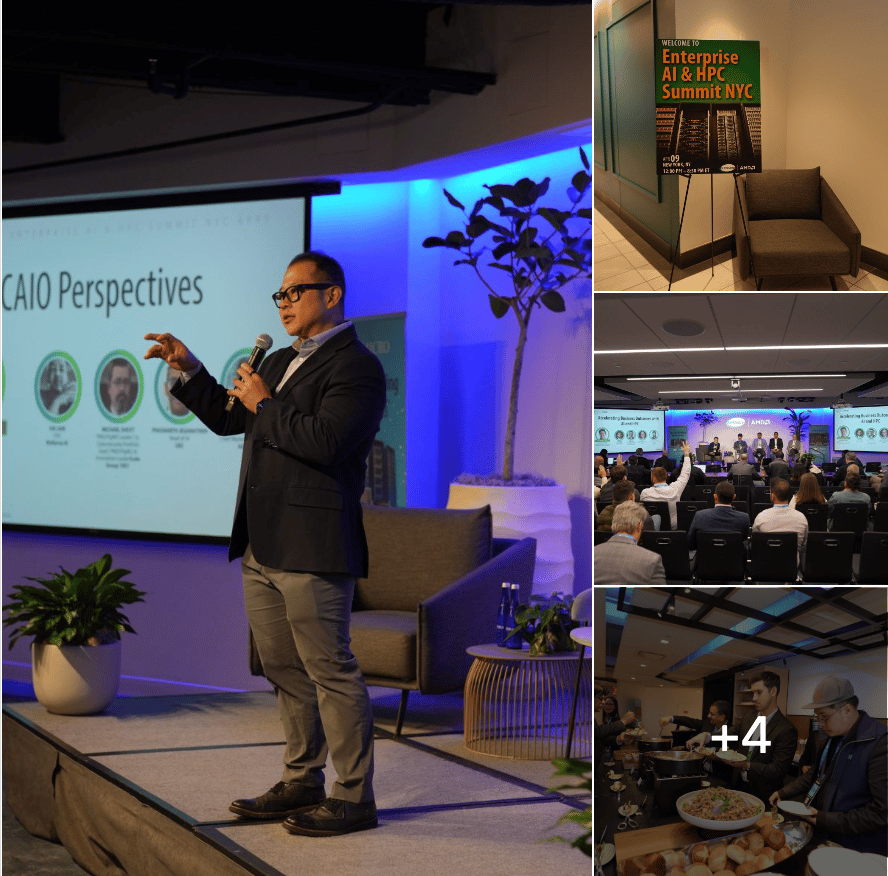
Highlights from Enterprise AI & HPC Summit NYC
On Thursday, the Enterprise AI & HPC Summit at Supermicro NYC made a few things clear: AI success is about operating at scale, securing deployments, and managing cost predictably.
Key takeaways:
Agentic AI is taking hold: Enterprises are shifting from single-user prompts to coordinated, multi-agent systems
Built for the AI factory: Supermicro and AMD highlighted H14 systems designed for EPYC “Turin” and Instinct accelerators, pushing memory bandwidth and efficiency where it actually matters
Cooling is now a gating factor: Direct-to-chip liquid cooling can reduce power consumption by up to 40%, and is quickly becoming standard at higher rack densities
From pilots to production: Teams across finance and enterprise are deploying AI and HPC closer to real workflows, fraud detection, trading, and core operations
Looking ahead: The “Open AI Factory” model is gaining ground, modular systems and open standards that let enterprises scale without getting locked in.

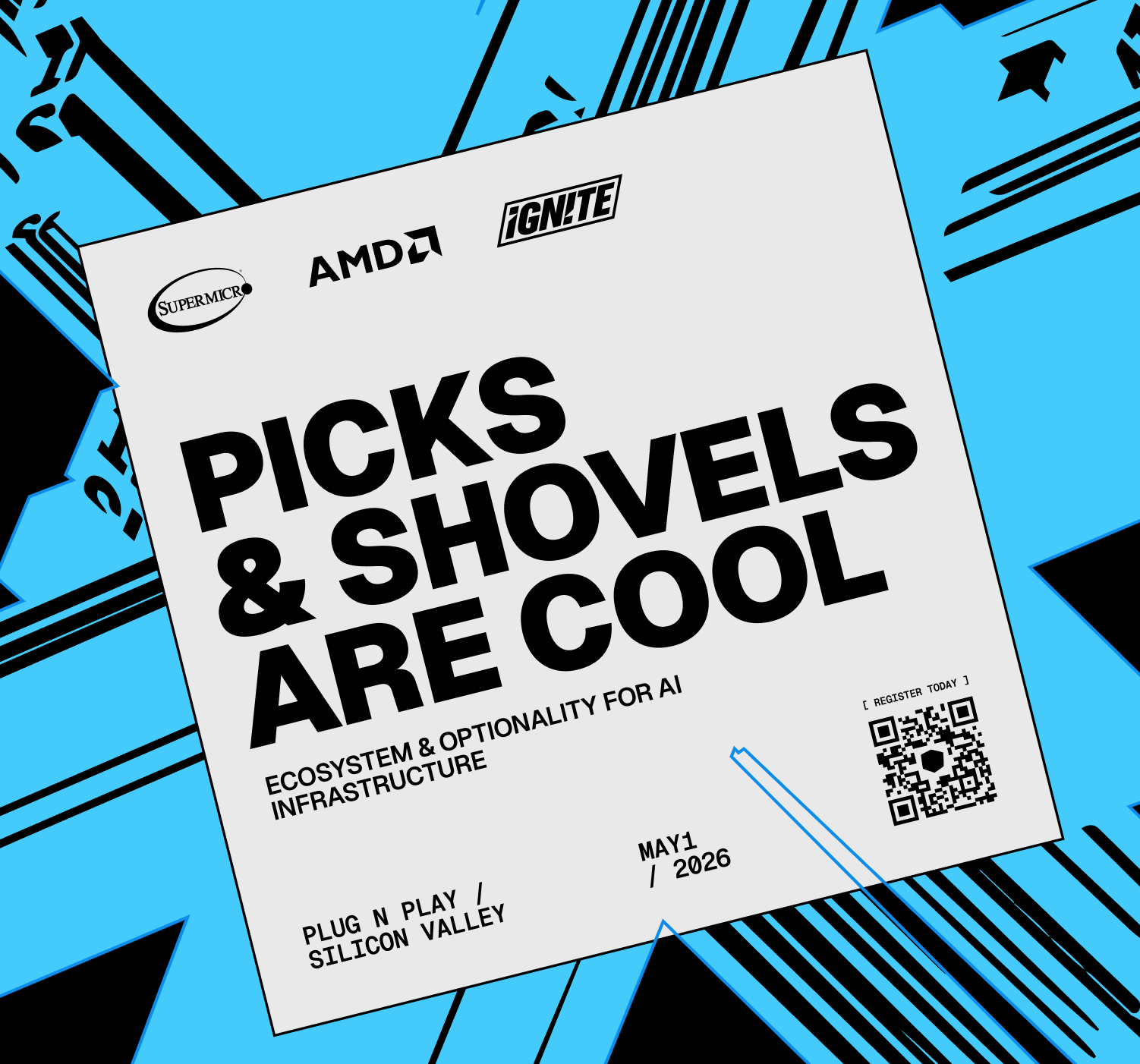
The South Bay is ground zero for AI infrastructure—and we’re turning it into a full week of high-signal events leading into AI INFRA SUMMIT.
In collaboration with Plug and Play, we’re bringing together the ecosystem across three days: kicking off Wednesday in downtown San Jose with a deep dive on data centers, followed by a full-day Physical AI program on Thursday with Telus Digital, and culminating in the AI INFRA SUMMIT as the grand finale.
Capacity is limited—lock in your spot early for AI Infrastructure Week See you there.
WED APR 29th 3p-6p | THURS APR 30th | FRI MAY 1st |


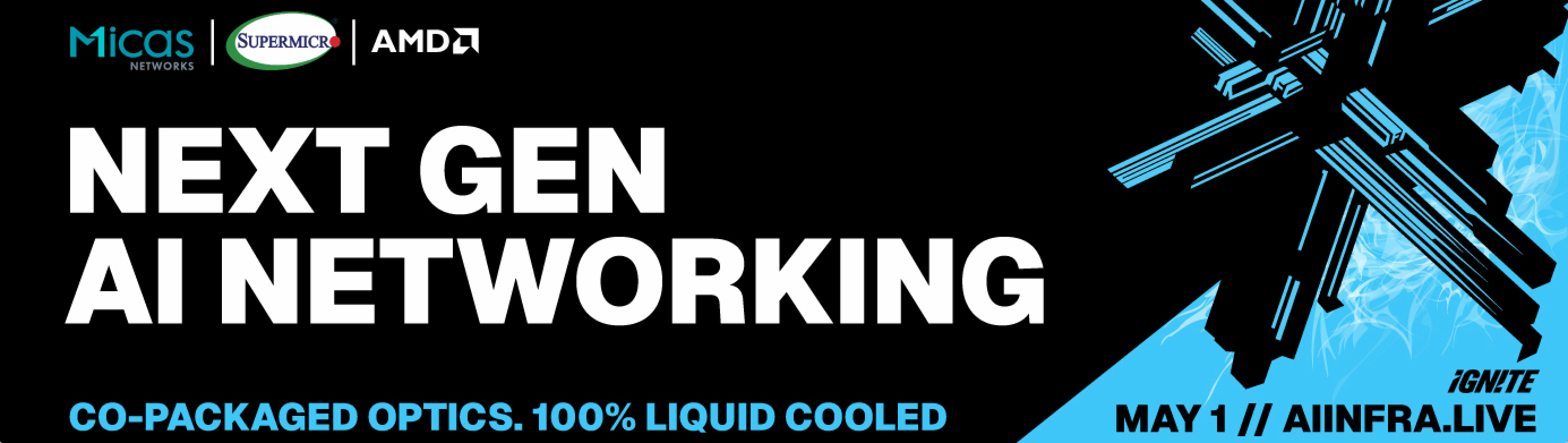
Builders Pass — Powered by Micas Networks
Scaling AI isn’t just about GPUs — it’s about how everything connects.
From high-speed switching to cluster-level interconnects, networking is now a core constraint in building AI systems at scale.
Together with Micas Networks, we’re offering a limited allocation of Builders Passes for engineers building across compute, networking, and infrastructure layers.
Application-only. Curated for builders.
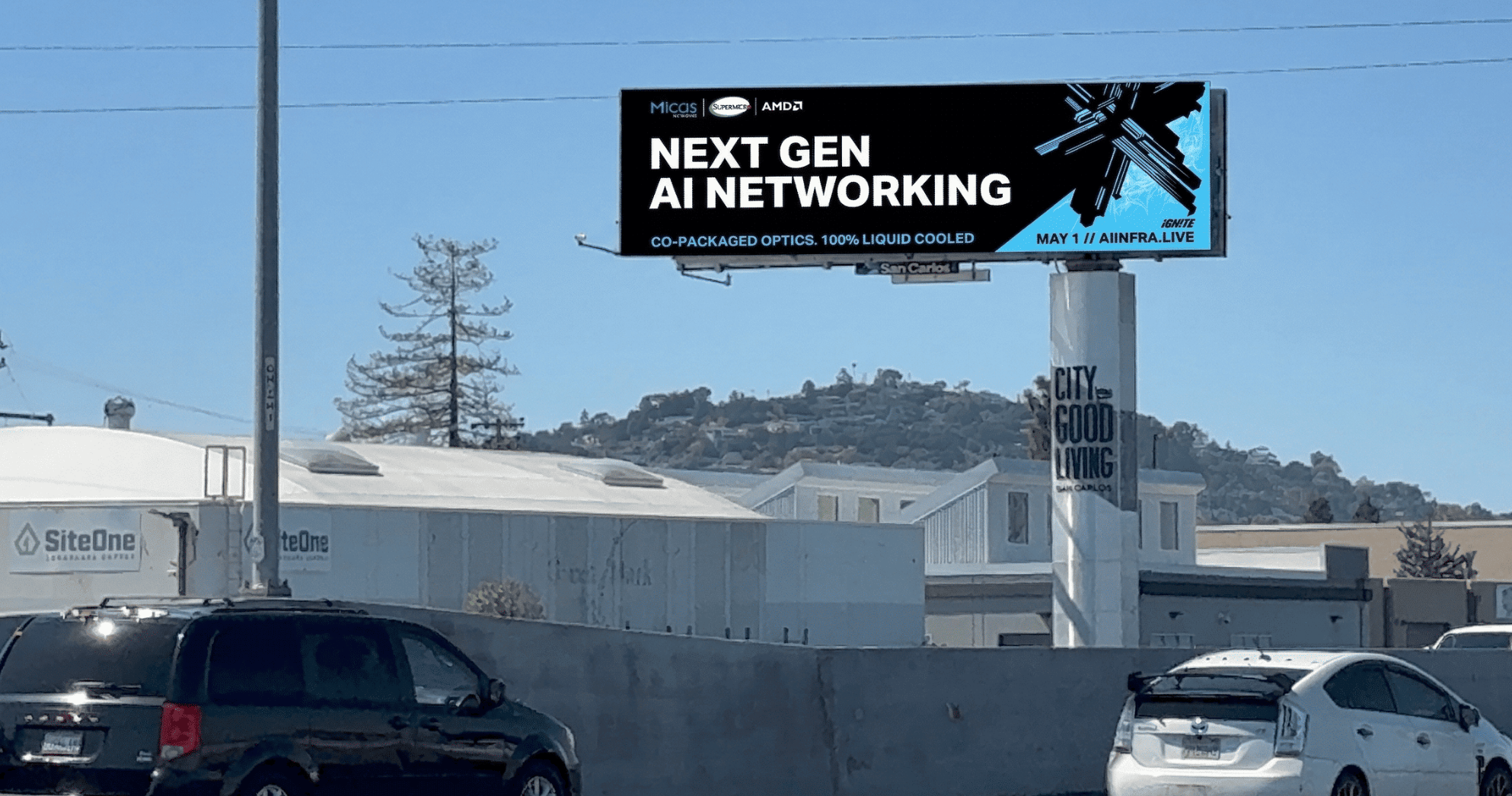
Look Ma! We’re on the 101! (San Carlos Northbound)
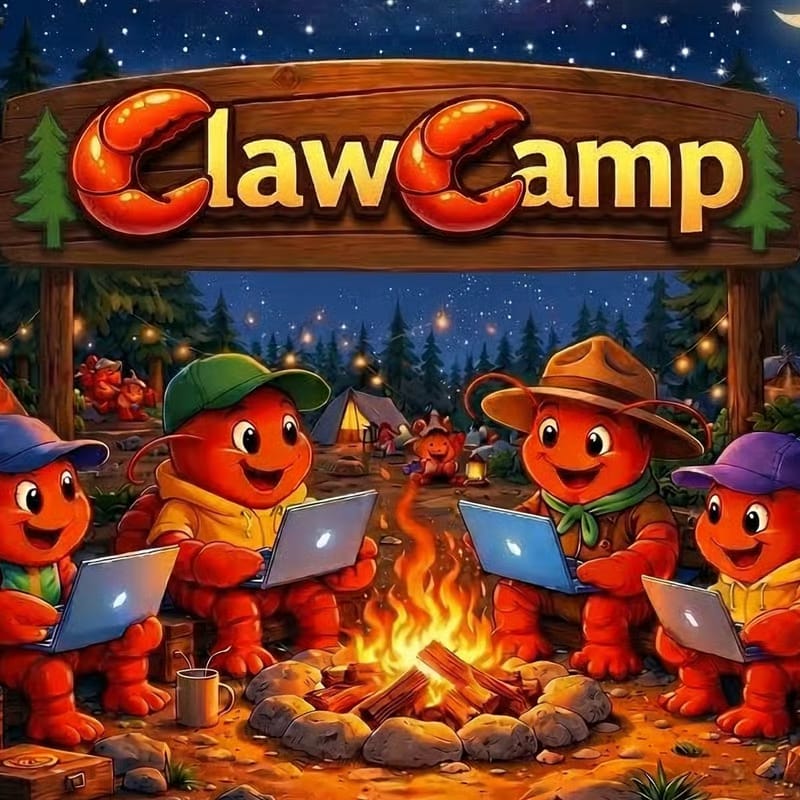
CLAWCAMP // APR16
We're excited to partner with ClawCamp.us on the community’s full-day workshop event, Thursday, April 16th. Attendees experience a full-day of upskilling (beginner—advanced) that includes Partner Perks (incl. free OpenClaw agents), Onboarding (for beginners), Workshops (all levels), Skills Building, Skills Competition, Networking, and more!
You can even get your own M4 Mac mini, fully configured, if you purchase that package. RSVP and learn more about the event here

Bay Area Startups Collectively Secured $213B+ In Q1 2026
Q1 2026 was the largest quarter of VC investment ever, with more than $300B invested globally. $213B (70%+) of that went into Silicon Valley startups, fueled by OpenAI's $122B round. That and forty-five other megadeals made up more than 80% of the $213B total, with a majority of the money going to AI and AI infrastructure. But megadeals also closed in robotics, energy, biotech, fintech, communication, applied & vertical AI, as more capital continues to concentrate in fewer companies.

A similar dynamic is playing out in VC, as funds with $1B or more dominate fundraising and emerging managers continue to have an uphill battle. In Q1, Andreessen Horowitz raised $15B, Thrive $10B, Founders Fund $6B, Kleiner Perkins $3.5B, Battery Ventures $3.3B and Lux Ventures $1.5B. Those funds alone total more than half of the $66B 2025 full year total.
Webinar Alert: LinkSV is restarting our Fundraising with LinkSV series on April 22 at 4PM. We'll cover when to start preparing and introduce a new tool for finding investors, customers and networking. Interested? Register here for the link.
Webinar Alert: LinkSV's Tech, Talent & Investment Trends is next Friday, April 10 @ noon PT. Join us for a look at Q1 2026, the unprecedented funding levels and where Q2 is likely to take us. How long can AI Infra funding continue at this level, and where do the non-AI startups go for investment? We'll have updates on funding to women and the increasing obstacles to closing Series A after your seed round. Register here for the link.
Early Stage:
Aria Networks closed a $125M Series A, delivering the next frontier in AI networking made possible by advances in fine-grain telemetry, AI, and Cloud.
Noon closed a $44M Series A, the first design tool rebuilt from the ground up by product designers, for product designers.
AfterQuery closed a $30M Series A, an applied research lab investigating the boundaries of AI capabilities and curating high-quality datasets to power the world’s leading AI models.
Rork closed a $15M Seed, an AI app builder made specifically for mobile apps.
Foundry Robotics closed a $13.5M Seed, rebuilding American manufacturing as an AI-first, assembly-focused, dual-use Everything Factory.
Growth Stage:
SiFive closed a $400M Series G, transforming the future of computing by bringing the power and flexibility of RISC-V to the world.
EnerVenue closed a $300M Series B, commercializing energy storage systems designed to behave like infrastructure to meet the demands of AI-driven energy systems.
Endovascular Engineering closed a $80M Series C, a commercial-stage medical technology company focused on advancing the treatment of venous thromboembolism (VTE).
Route 92 Medical closed a $50M Series F, improving outcomes for patients undergoing neurovascular intervention.
Luminai closed a $38M Series B, enterprise AI automation platform built for healthcare operations.
Your Feedback Matters!
Your feedback is crucial in helping us refine our content and maintain the newsletter's value for you and your fellow readers. We welcome your suggestions on how we can improve our offering. [email protected]
Logan Lemery
Head of Content // Team Ignite
Stack BTC while you sleep

Tired of trying to time the market? YieldClub puts your money on autopilot. Deposit from your bank account, and your balance starts earning automatically, routing yield into Bitcoin around the clock. No charts, no timing the market, no crypto expertise required.