- Valley Recap
- Posts
- 🔥 GTC’26: Where AI Factors Meet Human Chemistry ⚛️ 🤖 Are Bots Your New Users? 💰Bay Area Startups Collectively Secured $5.8B in March MTD
🔥 GTC’26: Where AI Factors Meet Human Chemistry ⚛️ 🤖 Are Bots Your New Users? 💰Bay Area Startups Collectively Secured $5.8B in March MTD

In partnership with


AI infrastructure has been built around a simple assumption: a human initiates a request, a model returns a response, and the interaction ends. That model begins to break down as agents enter the system. What replaces it is not a faster version of the same pattern, but a different kind of workload altogether, one where machines generate demand on behalf of other machines.
Agentic systems do not operate in single turns. They plan, decompose tasks, call tools, evaluate outputs, and iterate before producing a final result. Much of that activity never surfaces to the end user, yet it still consumes compute. A single request can expand into dozens or hundreds of internal steps, each requiring inference, memory access, or external calls. The visible output may look similar to a chatbot response, but the underlying workload is significantly heavier and far less predictable.

This shift changes how compute demand accumulates. Traditional inference models assume relatively stable cost per request, which allows operators to forecast capacity and optimize around latency and throughput. Agentic workloads behave differently. The number of tokens generated per task increases, the duration of each interaction stretches, and resource usage depends on how the agent chooses to solve the problem in real time. That variability introduces a level of non-determinism that existing infrastructure was not designed to handle.
Traffic patterns are changing alongside the workload itself. Instead of humans driving the majority of requests through interfaces, agents increasingly communicate directly with other services, models, and agents. APIs become the primary surface area, and machine-to-machine interaction begins to dominate over human-driven sessions. The web starts to look less like a collection of pages and more like a network of continuously interacting processes.
That transition carries implications beyond raw compute. Systems designed for human interaction rely on clear boundaries, authentication models tied to individual users, and relatively simple billing structures. Agent-driven environments require a different foundation. Agents must be able to discover each other, establish trust, negotiate access, and exchange value without human intervention at each step. Existing API frameworks were not built for that level of autonomy or scale.
Emerging standards aim to address these gaps by defining how agents identify themselves, verify intent, and transact with one another. Protocols for discovery, reputation, and payment are becoming necessary components of the stack, particularly as agents begin to operate across organizational boundaries. Without those standards, the system fragments into isolated silos, limiting the effectiveness of agent-based workflows.

The result is an infrastructure environment that must accommodate higher compute intensity, less predictable demand, and a growing volume of machine-originated traffic. Planning for that environment requires a shift in how capacity is modeled, how services are exposed, and how interactions are governed.
As agents take on a larger share of digital activity, they reshape the assumptions that underpinned the previous generation of internet architecture. The next phase of AI infrastructure will be defined by how well it supports systems that no longer wait for humans to act.


🔥 GTC’26: Where AI Factors Meet Human Chemistry ⚛️
We just wrapped an intense week at GTC, hosting seven back‑to‑back gatherings that brought AI leaders, builders, and visionaries into the same rooms while 30,000+ attendees turned downtown San Jose into an “AI campus.” While the main conference spotlighted AI factories, physical AI, and the next wave of infrastructure, our focus was simpler and more human: curated spaces where founders, operators, and investors could trade notes on what’s actually working, compare playbooks, and build relationships that will outlast any single product announcement.

Supermicro NVIDIA Networking Party kicked off the week with energy
Across intimate executive dinners, late‑night parties, and builder‑led sessions, a few themes kept coming up: everyone is feeling the acceleration in demand for AI infrastructure, nobody believes they can win alone, and the most valuable conversations are still happening off the main stage—in the corners where teams compare architectures, hiring bets, and go‑to‑market experiments. GTC made it clear that AI is now core infrastructure; our events made it equally clear that this new era will be shaped by tight, trusted networks that share real metrics, failures, and wins in the open.

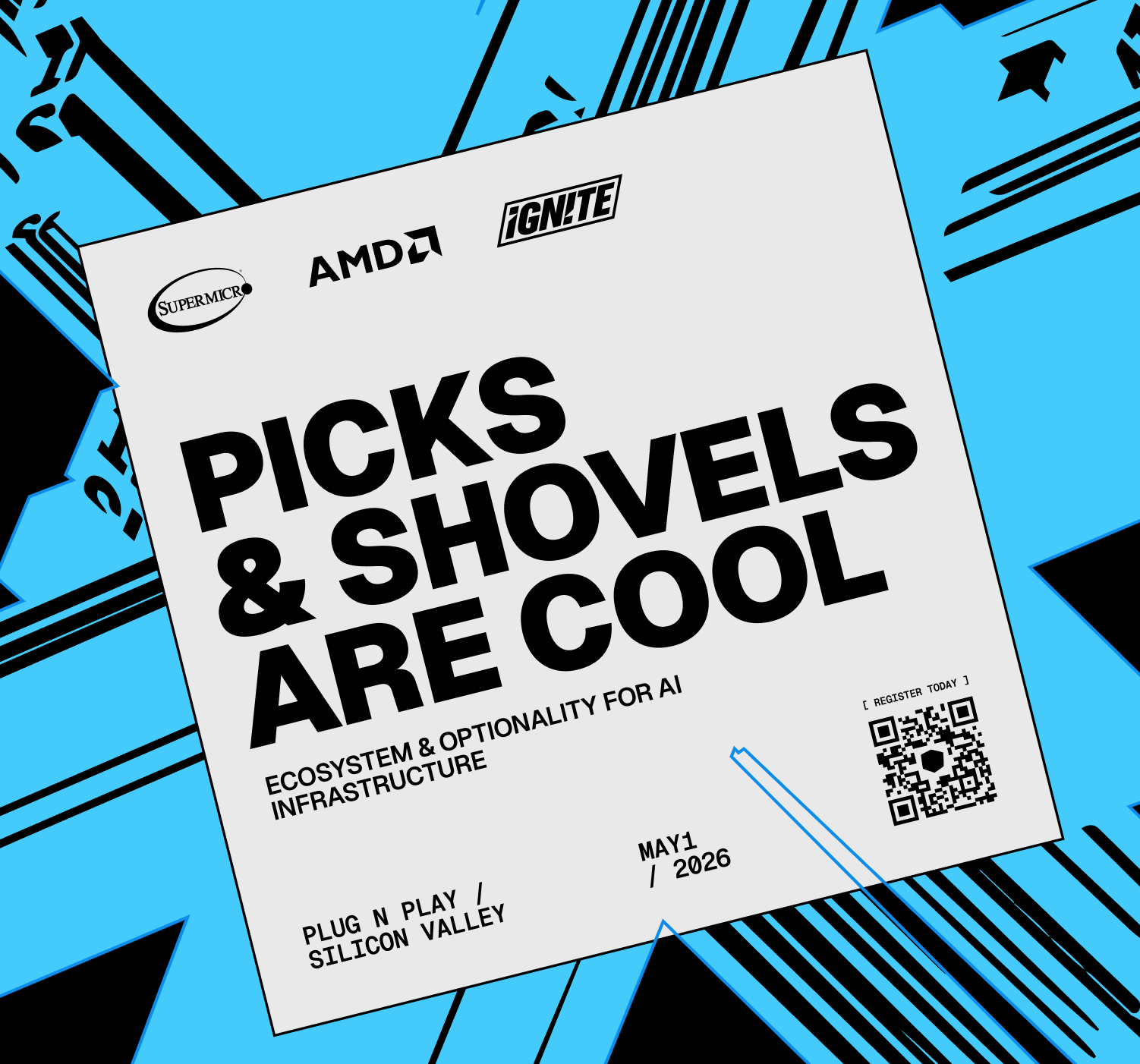
If you felt that energy at GTC—or wish you had—AI INFRA SUMMIT on May 1 is the next stop. Hosted by IgniteGTM, it’s a full‑day summit in Silicon Valley designed to reunite this community and go deeper on the infrastructure race that now defines AI, with visionary keynotes, technical deep dives, and networking built for serious builders. Join us to keep the momentum going: AI keeps rollin’, infra keeps turnin’—and the people you met at GTC will be there, ready to write the next chapter together

Bay Area Startups Collectively Secured $5.8B in March MTD
This was a quiet week, with just $1.3B in startup funding, for a March MTD of $5.8B. All AI-related eyes were on NVIDIA's GTC, with most companies preferring to delay their funding announcements. Frore Systems was the sole AI infrastructure-related funding in the Top Five. M&A was slow and the IPO market has been quiet - no, dead - as Kraken chose this week to pause their IPO plans due to the downturn in the crypto market.
After last month's record-breaking funding total, this month is settling into a less-frothy pattern that is closer to last year's monthly numbers. The March 2025 spike included OpenAI's $40B round; with a little over a week to go, the March 2026 total is well below that.

Webinar alert: Founders, next week don't miss: Legal Foundations, from Seed to Sale – Part 12 (the final edition), and LinkSV Fundraising – Finding Angels (plus partners, customers and more)
Follow Link Silicon Valley on LinkedIn to stay on top of what's happening in and around startup funding, venture capital and key players in the startup ecosystem.
Early Stage:
R1 Therapeutics closed a $77.5M Series A, focusing on the development of first-in-class therapies for patients with kidney disease.
Andromeda Cluster closed a $60M Series A, building the systems, network, and orchestration layer that makes the world’s AI infrastructure more accessible.
Halycon closed a $21M Series A, the AI platform for energy.
RAVEN.IO closed a $20M Seed, a cybersecurity company that protects applications at runtime and prevents both known and unknown attacks in real time.
Fort closed a $.5M Pre-Seed, building the most comprehensive personal health tracker on the market.
Growth Stage:
Frore Systems closed a $143M Series D, a pioneer in advanced thermal technologies that unleash performance across data centers and edge devices.
Rox closed a $138.5M Series B, provides AI Agent Swarms to help top sales teams grow their books.
RoboForce closed a $52M Series Unknown, building the future of Physical AI — scalable, deployable Robo-Labor designed for demanding industrial environments.
Beautiful.AI closed a $45M Series B, presentation software that makes it easy to turn your ideas into beautiful visual stories.
Paraform closed a $40M Series B, the hiring marketplace for elite recruiters helping companies fill their most critical roles faster.
Your Feedback Matters!
Your feedback is crucial in helping us refine our content and maintain the newsletter's value for you and your fellow readers. We welcome your suggestions on how we can improve our offering. [email protected]
Logan Lemery
Head of Content // Team Ignite
Here’s how I use Attio to run my day.
Attio is the AI CRM with conversational AI built directly into your workspace. Every morning, Ask Attio handles my prep:
Surfaces insights from calls and conversations across my entire CRM
Update records and create tasks without manual entry
Answers questions about deals, accounts, and customer signals that used to take hours to find
All in seconds. No searching, no switching tabs, no manual updates.
Ready to scale faster?