- Valley Recap
- Posts
- 🔊Announcing First Wave of AI Infra Summit 5 Speakers 💪🏼 Who's Ready for GTC?! 💰Bay Area Startups Collectively Secured $4.5B in March MTD
🔊Announcing First Wave of AI Infra Summit 5 Speakers 💪🏼 Who's Ready for GTC?! 💰Bay Area Startups Collectively Secured $4.5B in March MTD

In partnership with


The first featured speakers for AI INFRA Summit 5 are ready to be announced. We are excited to welcome Jeremiah Owyang (Blitzscaling Ventures), Gaurav Saxena (Ford Motor Company), and David Campbell (Scale AI) to the stage. These leaders are working at the front edge of the systems that power modern AI, from platform engineering inside large enterprises to the security and control models required for autonomous agents. This is only the first wave, with more speakers from across the AI infrastructure ecosystem to be announced soon.

The scale of the current data center expansion is difficult to grasp without stepping back from individual projects and looking at the numbers in aggregate. By 2030, global data center investment is projected to approach $7 trillion. Nearly two trillion dollars of that will go into construction alone, making the physical act of building these facilities the second-largest cost category behind the servers themselves.
That amount of capital compresses decision timelines across the entire value chain. Hyperscalers, colocation operators, energy providers, and private infrastructure investors are all deploying capital simultaneously, often across multiple campuses and regions. Finance teams are now responsible for allocating billions of dollars under conditions where delays cascade quickly, supply chains remain tight, and demand for compute continues to accelerate.

Under those conditions, traditional project planning methods begin to break down. Static construction schedules were built for projects where sequencing rarely changed and disruption could be managed manually. The current environment looks very different. Equipment lead times fluctuate, permitting timelines shift, and design specifications evolve as AI workloads push density higher. When dozens of construction tasks interact with hundreds of supply constraints, a fixed schedule becomes fragile.
Generative scheduling has emerged as one response to that complexity. Instead of relying on a single predefined plan, the approach evaluates thousands or millions of potential construction sequences while accounting for resource availability, site conditions, and project constraints. Planners can then test how different decisions affect delivery timelines or cost structures, allowing teams to identify faster execution paths or mitigate the impact of disruptions before they cascade through the project.
The benefit is not simply faster scheduling; it is better visibility into trade-offs. Finance teams can translate schedule changes into capital implications, evaluating how acceleration affects cash flow, procurement timing, and milestone payments. A delayed transformer delivery might extend construction by several weeks, but it may also delay revenue recognition or increase financing requirements. Scenario modeling makes those consequences visible early enough for executives to act.

Speed, however, is only half the challenge. The intensity of the current buildout forces developers to maintain tight discipline over costs, particularly when construction spending alone approaches two trillion dollars globally. That pressure has revived interest in should-cost modeling, a method that builds project budgets from first principles rather than relying on historical estimates or supplier quotes.
By breaking facilities down into materials, labor inputs, equipment costs, and overhead, finance teams gain a clearer view of what a project should cost under realistic conditions. The approach often reveals inefficiencies in design assumptions or procurement strategies that would otherwise remain hidden. Even modest improvements can compound quickly across portfolios measured in gigawatts.
The companies that master both speed and financial discipline will define the next phase of infrastructure development. In an environment where trillions of dollars are moving into the physical backbone of AI, execution quality has become just as important as access to capital.


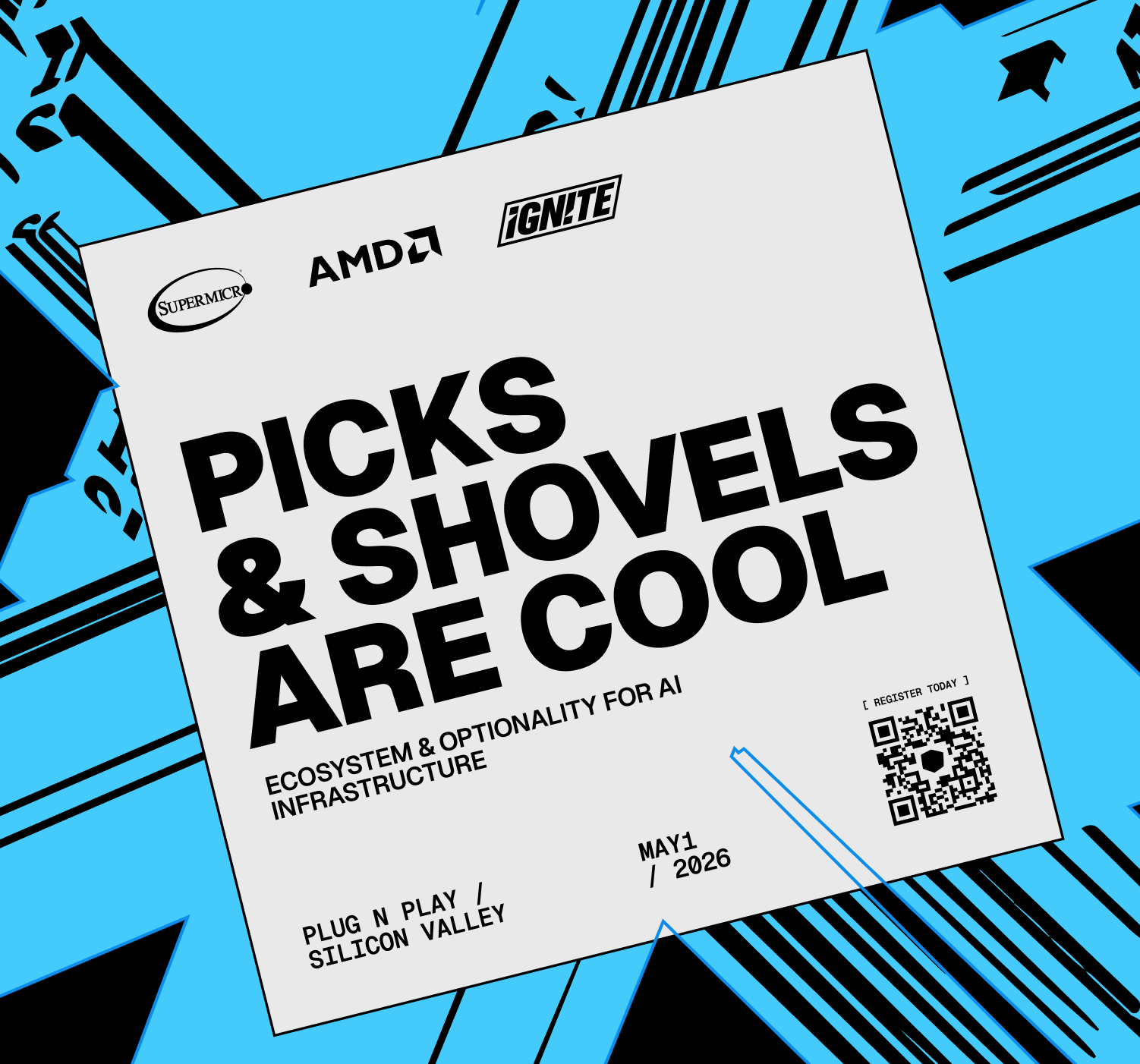
READY FOR GTC WEEK?




Bay Area Startups Collectively Secured $4.5B in March MTD
This week funding activity bounced back from last week's slowdown, bringing the month to $4.5B.
Mega-size VC funds continue to dominate the VC fundraising landscape. After Andreessen Horowitz' $15B raise in January, Lightspeed Venture Partners announced $9B across multiple funds, and Thrive Capital closed their $10B Thrive X fund. Now we hear that General Catalyst is raising a $10B fund, Founders Fund is close to closing a $6B fund and Spark Capital is working on a $3B raise. Per Pitchbook, the year started with ~$300B in dry powder and has seen a steady run of $100M+ and some $1B+ megadeals. These latest rounds indicate that the dry powder is being steadily restocked, underline the continuing consolidation of venture capital into fewer firms and larger funds.
For startups raising capital: Stay on top of who's raising, who's closing and who's investing with the Pulse of the Valley weekday newsletter. Founders get the newsletter, database and alerts for just $7/month ($50 value). Check it out and sign up here.
Follow Link Silicon Valley on LinkedIn to stay on top of what's happening in and around startup funding, venture capital and key players in the startup ecosystem..
Early Stage:
Mind Robotics closed a $500M Series A, building the world’s leading industrial robotics platform, capable of performing dexterous, variable, and reasoning-intensive tasks.
Rhoda AI closed a $450M Series A, building a new class of robot foundation model designed to bring general intelligence into the physical world.
Eridu closed a $200M Series A, advancing the frontier in AI networking.
Standard Kernel closed a $20M Seed, building AI infrastructure with AI.
Peltier closed a $5.6M Seed, powers active, connected, and precise cold chain solutions.
Growth Stage:
Nexthop AI closed a $500M Series B, building the most efficient Al infrastructure for hyperscalers and the world's largest cloud operators.
Quince closed a $500M Series E, an affordable luxury brand that sells high-quality fashion and home goods at radically low prices— direct from the factory floor.
Replit closed a $400M Series D, the agentic software creation platform that enables anyone to build applications using natural language.
Sunday closed a $165M Series B, building robots for busy households, delivering in 2026.
ORO Labs closed a $100M Series C, a procurement orchestration company on a mission to humanize the procurement experience.
Your Feedback Matters!
Your feedback is crucial in helping us refine our content and maintain the newsletter's value for you and your fellow readers. We welcome your suggestions on how we can improve our offering. [email protected]
Logan Lemery
Head of Content // Team Ignite
Your Tax Data, Finally in One Place

Are you tired of hunting down data, fixing errors, and manually updating disconnected spreadsheets?
Tax reporting isn’t a simple as it used to be. You need real-time, flexible reporting so you can confidently make decisions backed by accurate, centralized data.
Learn how bringing all your tax information into one central system automates repetitive tasks, improves scenario planning, and frees your team to focus on strategy instead of data entry.
Whether you operate in one country or dozens, Longview Tax scales with you—reducing risk, speeding up your close process, and helping you optimize tax policies across all jurisdictions.